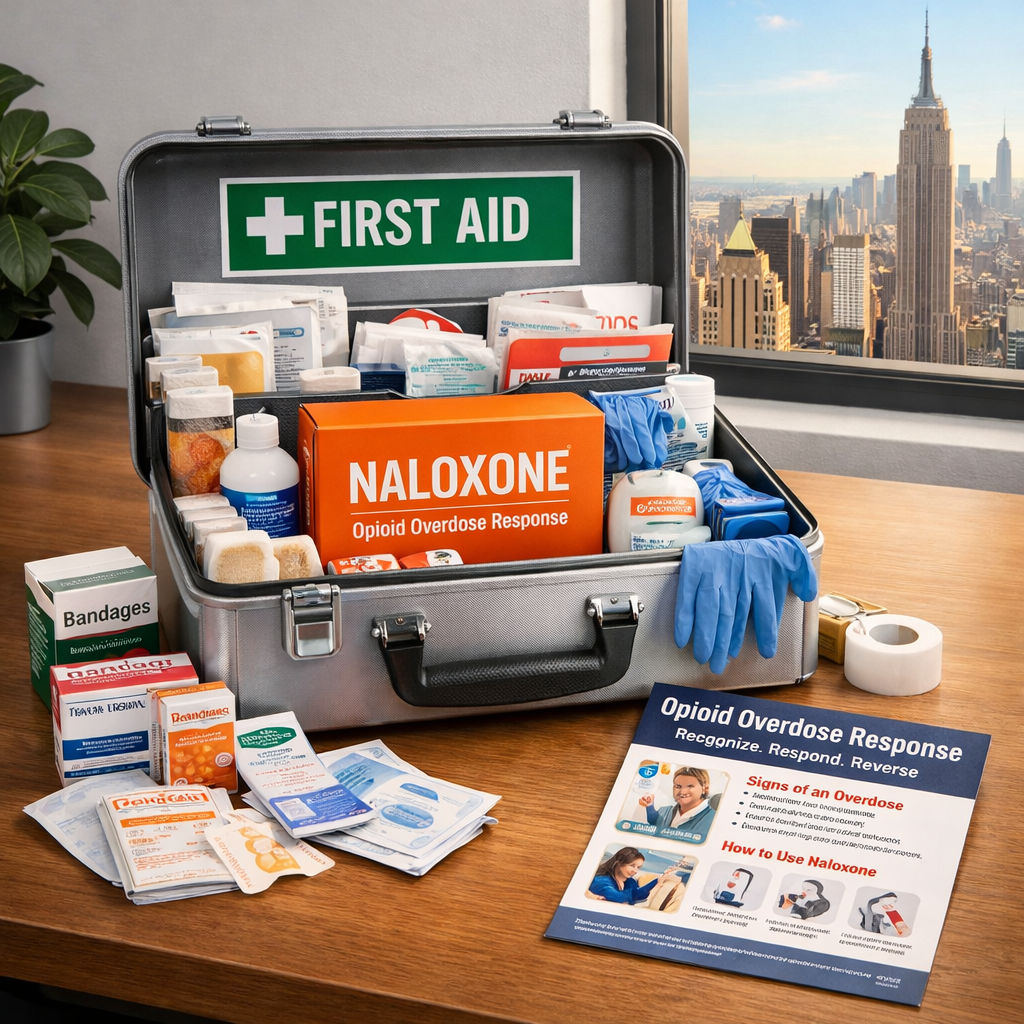

New York and California have taken significant steps toward requiring opioid antagonists, such as naloxone, to be included in workplace first aid supplies, reflecting a broader effort to address overdose risks in occupational settings.
In New York, legislation enacted in 2025 amends the state Labor Law to require employers who are already obligated to maintain first aid supplies under federal rules to also include an opioid antagonist. The law provides a 180-day implementation period and takes effect June 10, 2026. The New York State Department of Labor is expected to issue guidance on compliance, including training and storage considerations.
California has adopted a regulatory approach. Assembly Bill 1976, signed in 2024, directs Cal/OSHA to revise workplace first aid standards to require naloxone or another FDA-approved opioid antagonist. Under the statute, Cal/OSHA must propose regulations by December 1, 2027, with final adoption anticipated by December 1, 2028. Once adopted, the requirement will be enforceable through California’s occupational safety regulations.
Other states have not yet imposed similar mandates. Illinois, for example, does not require naloxone in workplace first aid kits but has expanded access through standing orders, liability protections, and public health programs. State agencies and safety organizations in Illinois continue to recommend naloxone availability and overdose response training as a best practice for employers.
At the federal level, OSHA does not currently require opioid antagonists in first aid kits. However, the actions taken by New York and California may signal a trend toward expanded state-level first aid requirements.
Compliance Impact for Employers
Employers operating in New York should begin preparing now for the June 2026 compliance deadline by reviewing first aid inventories and monitoring forthcoming Department of Labor guidance. California employers should track Cal/OSHA rulemaking and anticipate future updates to first aid kit contents and training expectations. Multi-state employers may wish to evaluate whether standardizing naloxone availability across locations is operationally practical, even in states like Illinois where inclusion remains voluntary but increasingly recommended.
Learn about dental compliance.
Subscribe Here!